The Gold Standard of Proof: Why we only support Certification from UKAS-Accredited Bodies.
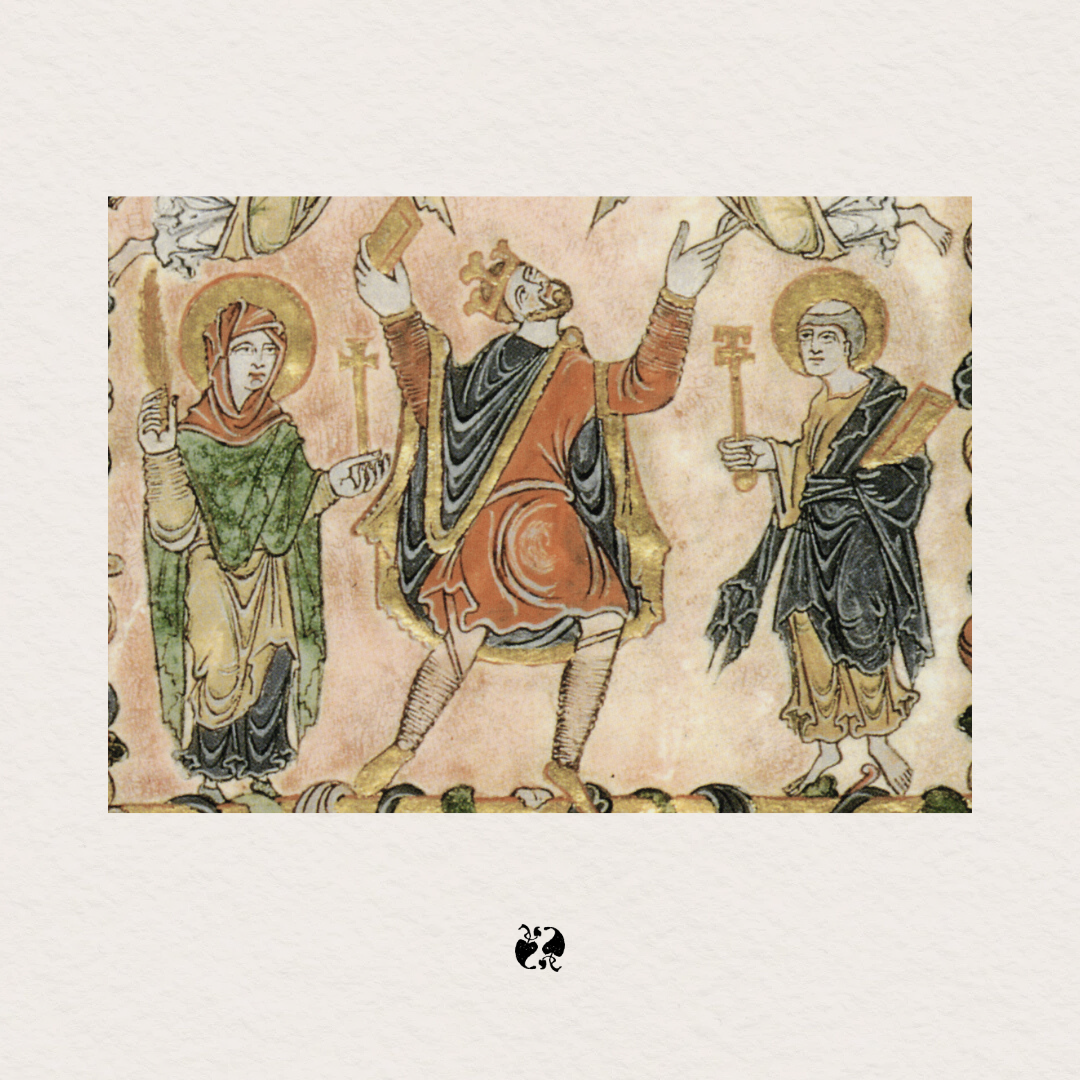
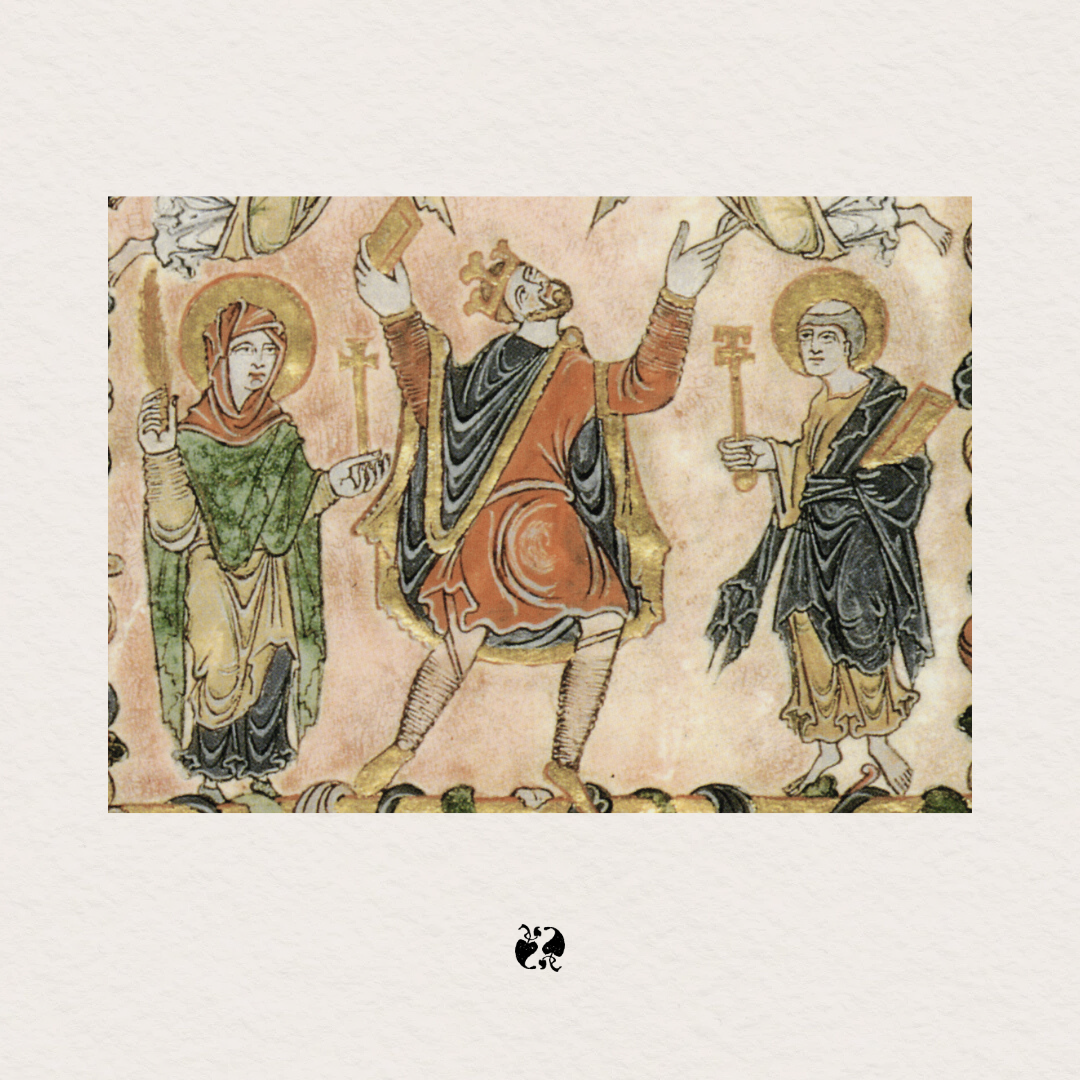
For the Curious: A King’s word was only as good as his witnesses; here, the Charter is bookended by the two figures he needed most to ensure no one questioned the decree. Source: New Minster Charter, Cotton MS Vespasian A VIII, f. 2v. Winchester, 966 AD. Original illumination.
At Bold Green Strategies, our work is built on the intersection of Narrative + Proof. For any sustainability or quality strategy to be effective, the data must be held to a high standard of technical certainty. This is why we have a firm policy: we only support and implement management systems that lead to certification issued by a UKAS-accredited body.
A Heritage of Excellence: From the Crown to the Global Stage
To understand the value of a standard, it helps to look at its origins. Most global management systems have British DNA, stemming from the British Standards Institution (BSI). Founded in 1901, BSI was the world’s first national standards body. They did not just adopt these international rules; as the UK National Standards Body, they co-authored the standards alongside the International Organization for Standardization.
The history of these standards provides a sense of their rigour:
ISO 9001 (Quality Management): This began as BS 5750, a standard driven by the Ministry of Defence to ensure consistency in manufacturing for the armed forces. It was designed to ensure that the entire process—not just the end product—was robust.
ISO 14001 (Environmental Management): This evolved from BS 7750, which BSI launched in 1992 as the world’s first environmental management standard. The current landscape is evolving to include much more explicit requirements around biodiversity, resource use, and climate resilience. For more on these shifts, see our insight on ISO 14001:2026 key changes.
ISO 20121 (Sustainable Events): This standard is a direct legacy of the London 2012 Olympic Games. It started life as BS 8901 to ensure the Games left a positive social and environmental footprint, later becoming the international benchmark for event sustainability. Reflecting the rapid evolution of this sector, the standard was recently updated to ISO 20121:2024, introducing more robust requirements for social impact, human rights and legacy.
UKAS vs ASCB: The Authority of the Crown
It is important to clarify a common misconception regarding terminology: Accreditation is not the same as Certification. Accreditation bodies (like UKAS or ASCB) ‘check the checkers’—they grant authority to the certification bodies (the auditors). A business then receives a certification to an ISO standard from one of those auditors.
You do not hold an ‘ISO accreditation’; you hold a certification issued by an accredited body. This distinction is vital—using the correct terminology signals to procurement teams that you truly understand the governance behind your management system.
In the UK, this landscape is broadly categorised into two camps: UKAS-accredited and Non-UKAS. Understanding which one your business holds is often the difference between passing a Tier 1 procurement gate or being disqualified at the first stage.
The United Kingdom Accreditation Service (UKAS) is the sole national accreditation body recognised by the British government. It operates under a Memorandum of Understanding with the Department for Business and Trade.
The UK government’s official policy on Conformity Assessment and Accreditation confirms that it only recognises accreditation from UKAS for bodies operating in the UK. This means that for any central government contract, holding a non-UKAS certificate is often treated as having no certification at all, as it fails to meet the mandatory National Quality Infrastructure requirements.
A UKAS-accredited body is a member of the International Accreditation Forum (IAF). This is a critical distinction because it ensures that a certificate held by a UK boutique hotel or a premium brand is recognised and respected globally. Without the UKAS crown-and-tick mark, a certificate lacks the formal recognition required for central government contracts and high-stakes procurement.
The Governance of Marks: Branding Guidelines and Misuse of Badges
One of the most common errors we see is the incorrect use of ISO and UKAS branding. There are strict, government-backed guidelines on how these badges must be displayed, yet they are frequently misunderstood.
It is important to understand that the ‘ISO’ logo itself (the circular globe symbol) is the organisational logo of the International Organization for Standardization. Unless you are that organisation, you are not permitted to use it. Businesses are only permitted to use the specific certification mark provided by their accredited auditor.
Furthermore, UKAS-accredited symbols come with significant restrictions. Technically, the crown-and-tick cannot be used on vehicles, flags, or primary product packaging. While it is a common sight on many company vans across the UK, this is actually a frequent point of non-conformance in audits. Interestingly, non-UKAS bodies like the ASCB often have much looser rules, allowing their symbols to be used freely on vehicles.
When we see a UKAS logo on a vehicle, it usually means the business has unknowingly bypassed the strict DBT guidelines. In a high-stakes audit or a Tier 1 tender review, these technical details are exactly what professional evaluators look for to gauge a company’s true level of compliance.
The Non-UKAS Alternative and Contractual Risk
You may encounter providers offering accreditation through non-UKAS bodies such as the ASCB. While these may appear more affordable or faster to implement, they sit outside the government-recognised IAF framework. When comparing UKAS vs ASCB, there are several risks to consider:
The Tender Trap: UK Government and public sector frameworks mandate that ISO certifications be issued by a UKAS-accredited body. Without this, businesses are often disqualified at the first gate of a PQQ (Pre-Qualification Questionnaire). We are also seeing a shift across high-value private sectors; clients are increasingly treating UKAS as the non-negotiable benchmark for their own due diligence. For any business aiming for a place on a Tier 1 Approved Supplier List (ASL), a non-UKAS certificate can represent a failure to meet mandatory compliance criteria. This is particularly critical under the Procurement Act 2023, which moves the industry away from the old 'lowest-cost' focus of MEAT to the Most Advantageous Tender (MAT). Under this new lens, a Carbon Reduction Plan (now governed by PPN 006, formerly PPN 06/21) is no longer just a hurdle to pass—it is a core scoring component of your bid. Because the Act demands higher levels of transparency and integrity, procurement officers are defaulting to the UKAS crown-and-tick as the only definitive proof that your sustainability data is defensible, audit-ready, and legally compliant.
The Ten-Year Lock-In: A management system should provide strategic flexibility, not act as a ten-year subscription service. We are seeing a rise in aggressive, bundled contracts that lock businesses into decade-long commitments that are difficult to exit. At Bold Green Strategies, we believe in building permanent, internal capability rather than a long-term contractual burden.
Aggressive Upselling: Non-UKAS routes are often bundled with mandatory software or consultancy subscriptions that can be difficult to exit and may not serve the actual long-term goals of the business.
The Conflict of Interest Check: Transparency regarding commercial partnerships is vital when selecting a sustainability partner. We are seeing an increase in ‘consultancies’ acting as undisclosed sales agents for specific non-UKAS certification bodies. If your advisor receives a commission for funnelling you into a bundled ISO contract, their loyalty is to the referral fee, not your strategic success. This creates a fundamental conflict of interest. At Bold Green Strategies, we do not accept kickbacks or referral fees. Our advice remains strictly independent, ensuring your management system is built for technical integrity and long-term capability—not to serve a consultant’s commission-led sales target.
Choosing the Right Partner for Your Brand
The certification landscape offers various paths depending on your brand positioning. Within the UKAS framework, there are numerous providers, each with a distinct market fit and audit style. We help our clients navigate this selection process by matching them with the UKAS-accredited body that best fits their specific profile:
The Prestige Audit: Best for global luxury groups and heritage brands. These auditors provide high-formality, rigorous assessments that carry significant weight. The pedigree of the certificate is used as a strategic asset to reassure stakeholders.
The Sector Specialist: Ideal for complex retail, food, or hospitality environments. These auditors speak the language of the shop floor and the supply chain. They understand that quality in a five-star hotel looks very different from quality in a manufacturing plant.
The Modern & Pragmatic: For SMEs and fast-growth companies that need a lean, tech-driven path to compliance. These providers prioritise digital evidence and streamlined processes, ensuring the management system doesn't create a secondary layer of unnecessary administrative weight.
Transitioning to Technical Certainty: How we help
We frequently work with clients who find themselves tied to non-UKAS frameworks or restrictive multi-year contracts. Our team specialises in managing the transition away from these setups.
We handle the technical mapping of your existing processes to the requirements of a UKAS-accredited body, ensuring you don't lose progress as you move towards a more recognised standard. We navigate the migration of your data and policies, so your business is no longer excluded from major opportunities. Our goal is to ensure your management system is a tool for growth and proof, not a contractual burden.
De-risk your Certification Strategy
Whether starting from scratch or switching certification bodies:
Read about our ISO Support to learn more.
Book a call; we’d love to hear from you.